Little Word Builder: A Game to Help Kids Explore Vocabulary
Little Word Builder is an educational flashcard game designed for children aged 3–5 to explore vocabulary through emoji-based visual cues. With 5 fun categories, it encourages word recognition, imagination, and cognitive association. The game blends play and learning in a simple, intuitive format that even pre-readers can enjoy, making it ideal for both at-home and classroom engagement.
Scope: Product Design, Educational Game Design, UX Research, User Testing,
Iterative Prototyping
How can we create an educational card game that helps children aged 3–5 build vocabulary through play without relying on reading skills?
PROBLEM:
Early learners often struggle with traditional vocabulary tools that rely heavily on text and adult guidance. There is a need for a simple, intuitive learning format that allows pre-readers to explore language independently through visual and tactile interaction.
COMPETITOR ANALYSIS:
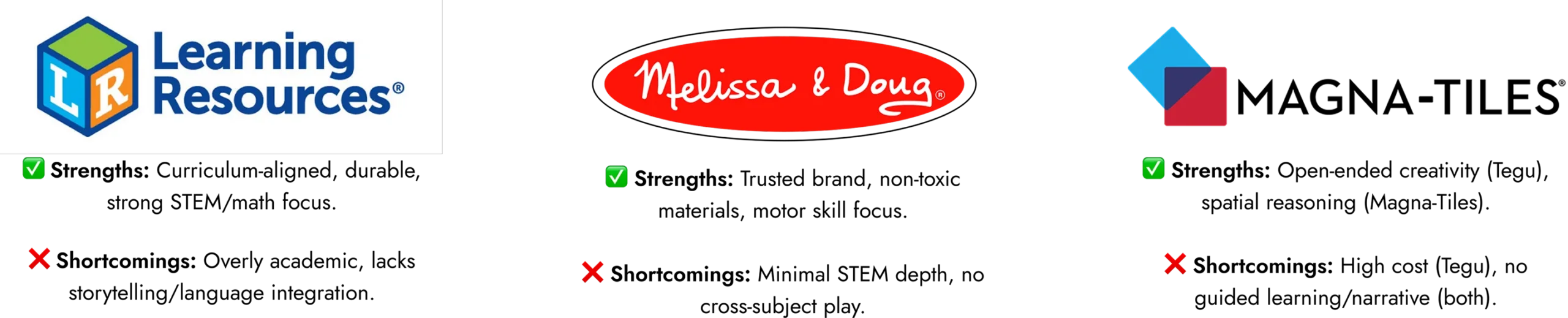
While Little Word Builders introduces a novel approach to teaching compound words through tactile, screen-free play, i examined competitors in adjacent niches—STEM toys, language-learning tools, and open-ended play—to identify best practices and pitfalls.
PROCESS:
I began by defining the developmental milestones and learning goals relevant to children aged 3–5. Through iterative sketching, prototyping, and playtesting, I refined the game mechanics to ensure the experience was intuitive and required minimal adult assistance.
SECONDARY RESEARCH:
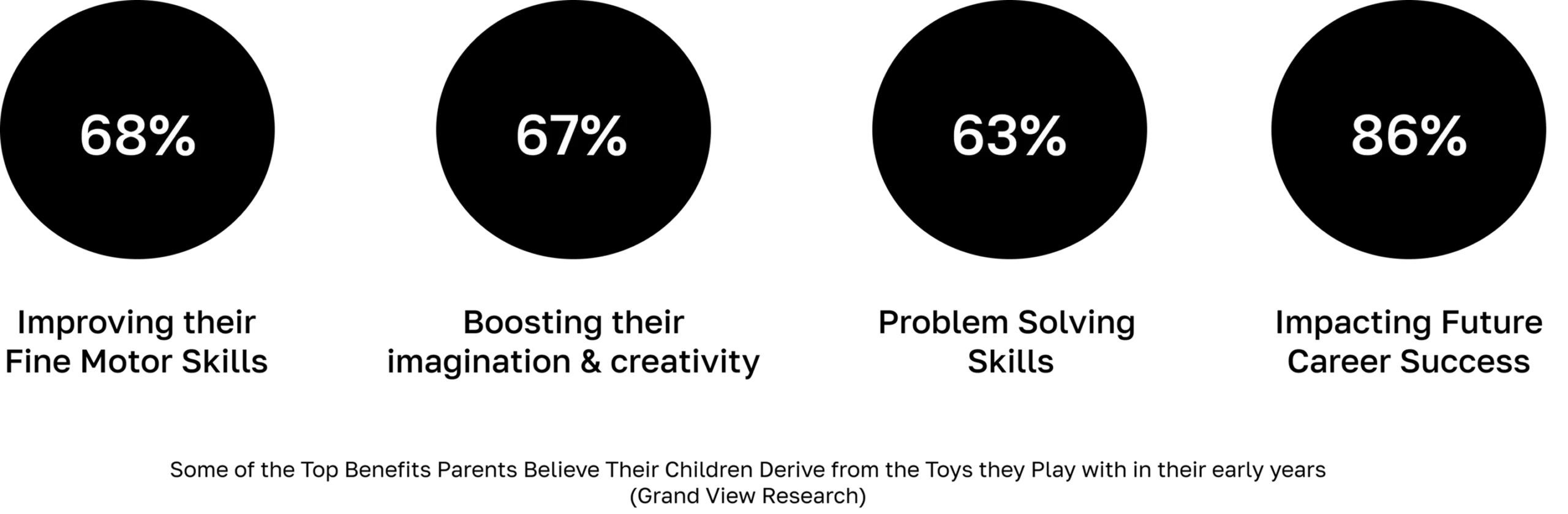
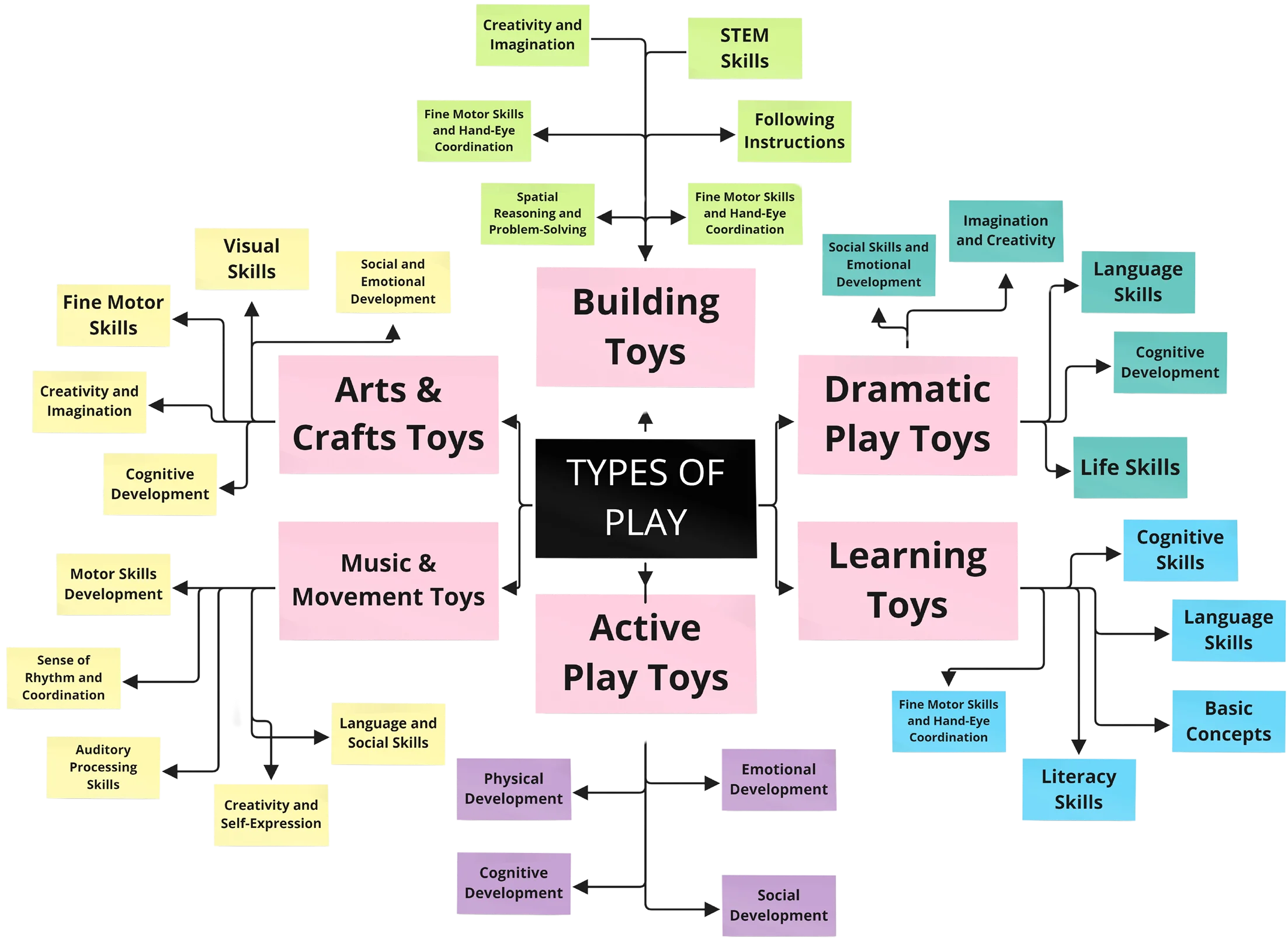
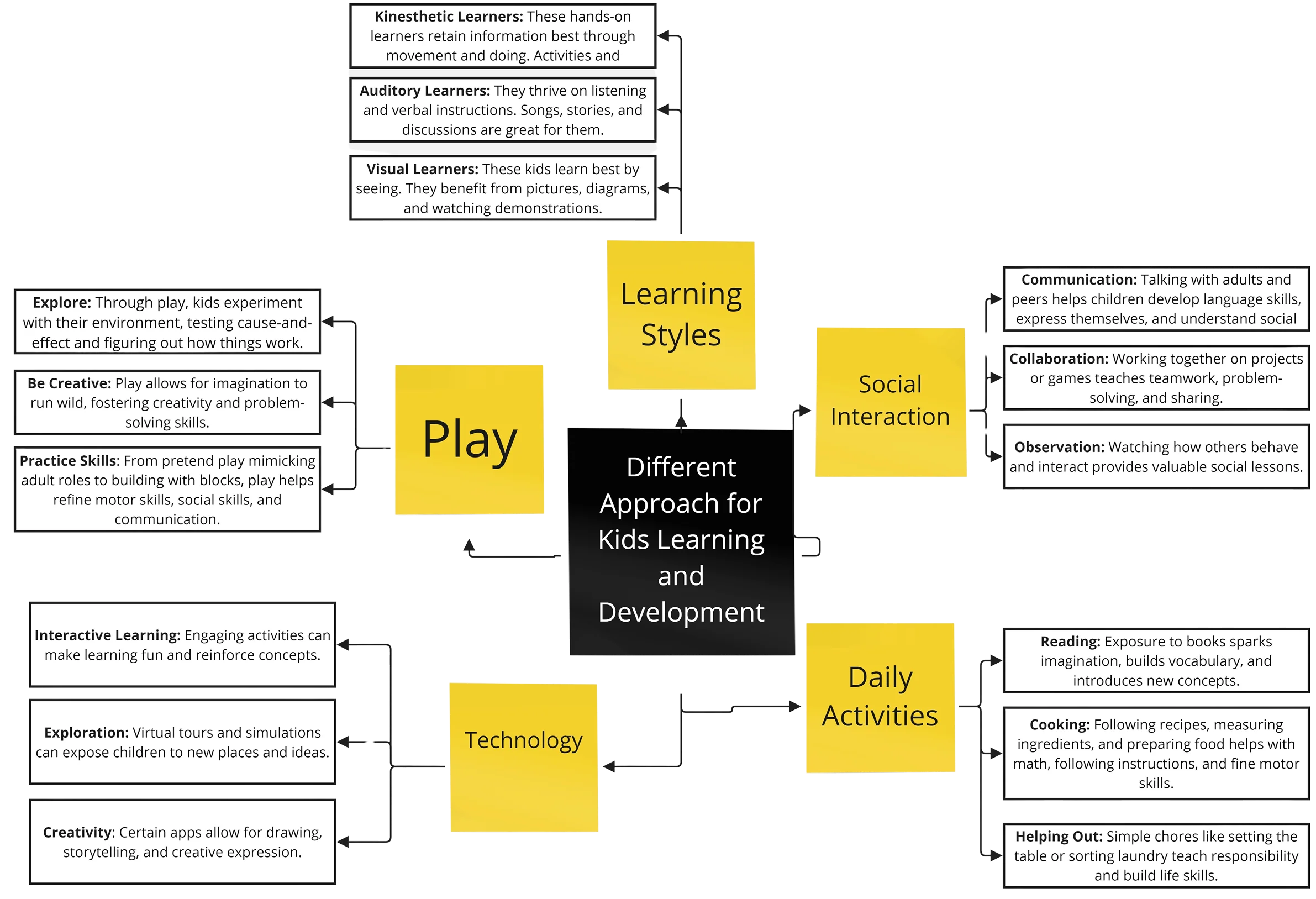
I conducted secondary research on early childhood development, learning styles, and cognitive growth patterns in preschoolers. Insights from educational psychology and toy industry benchmarks informed the structure, category logic, and visual clarity of the final game.
JOURNEY MAPPING:
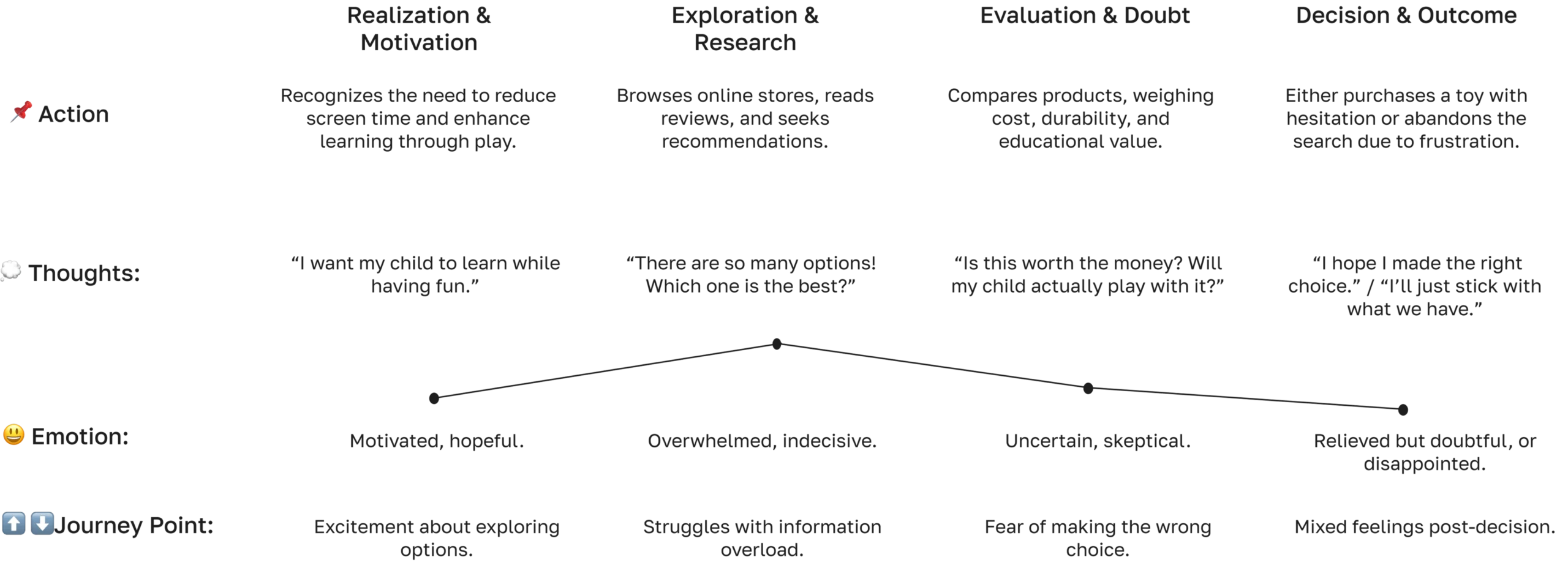
I mapped the parent’s decision journey from recognizing the need for educational play to post-purchase reflection. This helped me identify moments of overwhelm and doubt, guiding clearer communication and stronger trust cues in the product design.
KEY INSIGHTS:
STEP 1
Preschoolers think visually before verbally.
Children aged 3–5 respond faster to images and associations than written text, making emoji-based cues more effective than word-heavy instruction.
STEP 2
Attention spans are short and interaction must be immediate.
Games need quick feedback, simple rules, and clear outcomes to maintain engagement without adult intervention.
STEP 3
Parents look for visible learning value.
While children seek fun, parents evaluate toys based on developmental benefits, clarity of purpose, and long-term educational relevance.
OPPORTUNITY:
How might we design a physical card game for pre-readers that communicates meaning instantly through intuitive visuals and allows children aged 3–5 to engage independently?
Solution:
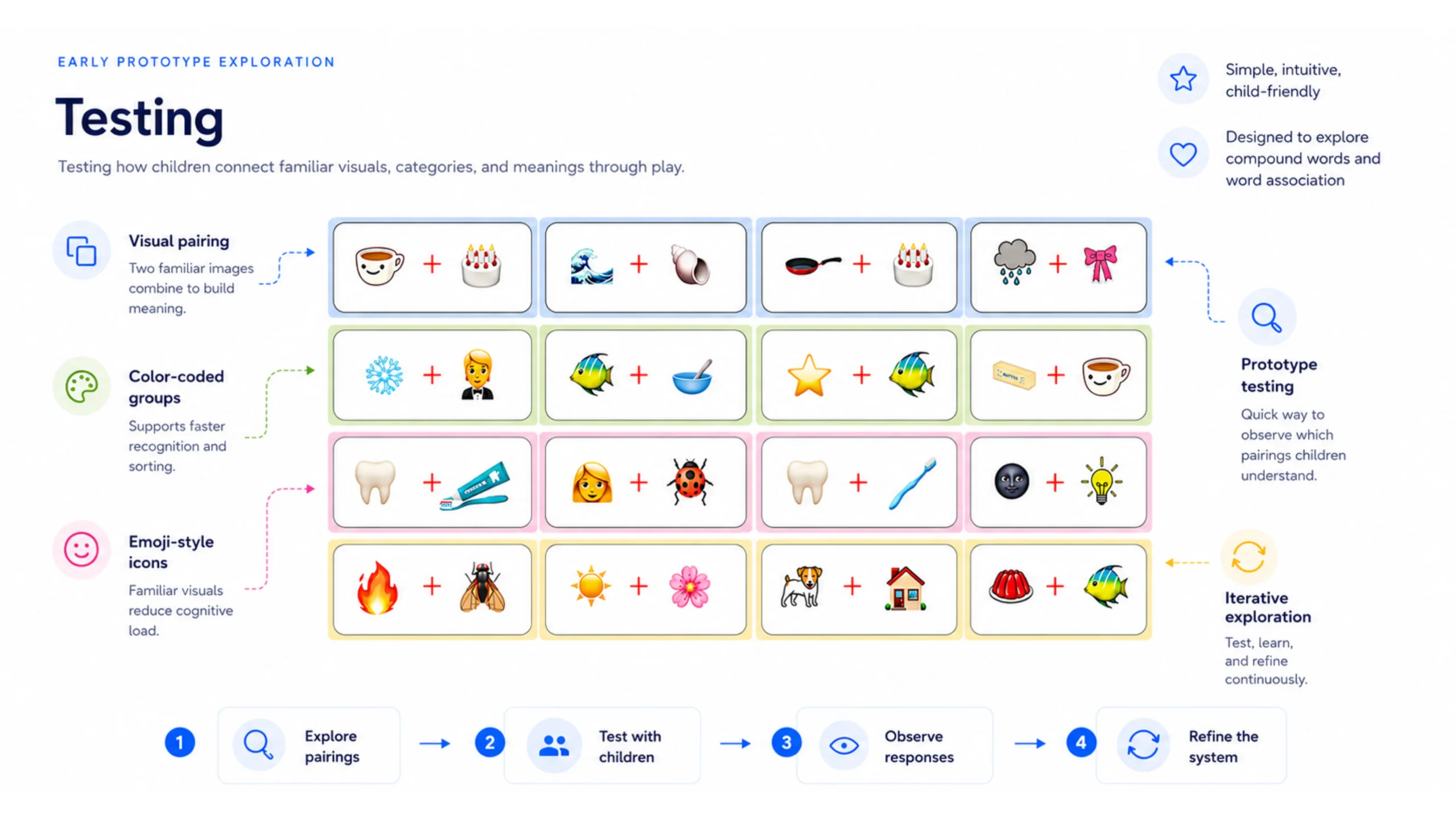
I began developing Little Word Builder as a visual word-association game that helps preschool children connect familiar images and form new words through play. I created low-fidelity emoji-based cards to explore different combinations, categories, and difficulty levels. Through repeated prototyping and user testing, I refined the visuals, instructions, and game flow to make the experience intuitive, engaging, and easy for children to play independently.
USER TESTING:
I tested the low-fidelity prototype of Little Word Builder with 30+ students in Central Park to
understand which word pairings felt intuitive, how easily children recognized the visuals, and where the game needed refinement.
FINAL GAME
DESIGN:
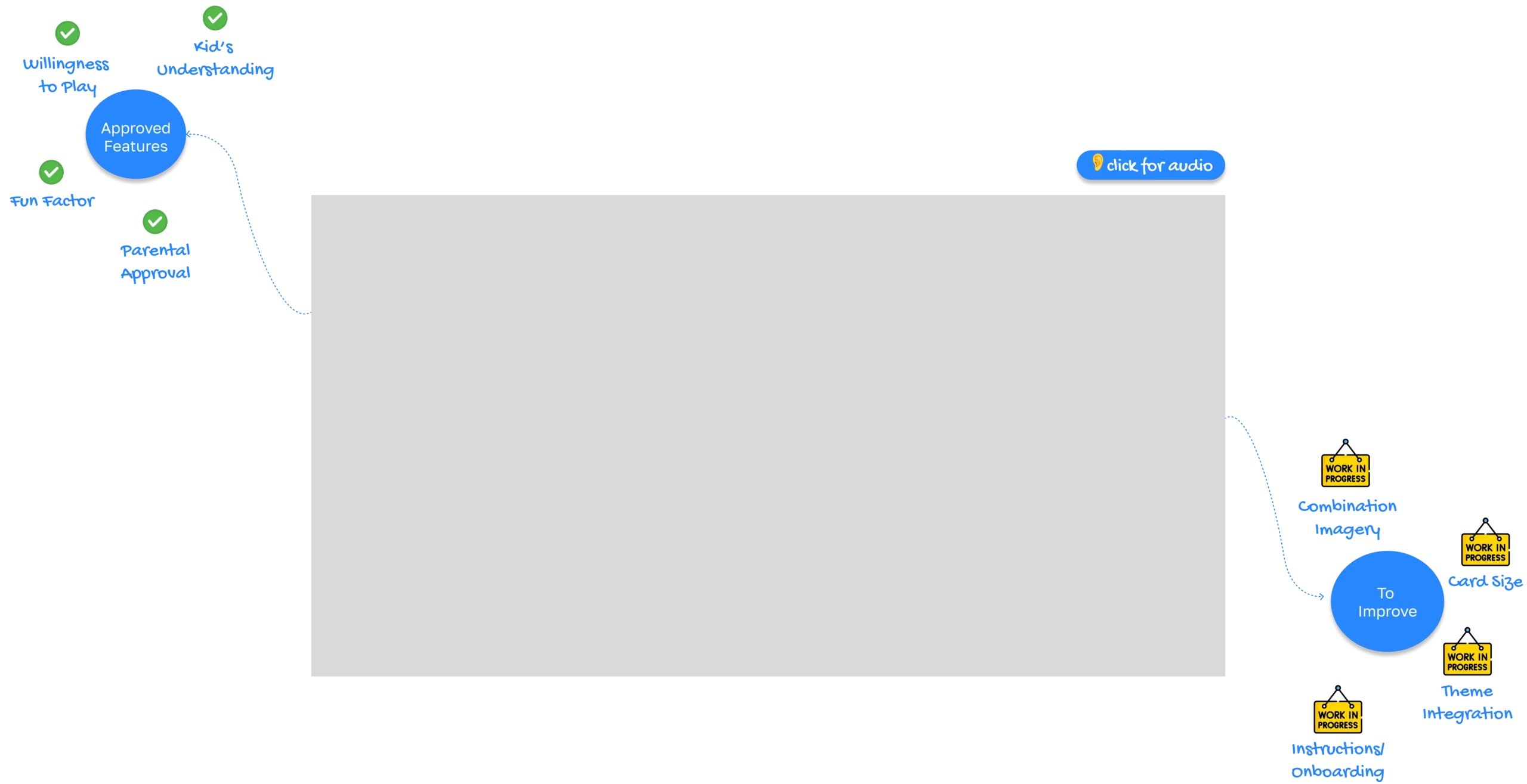
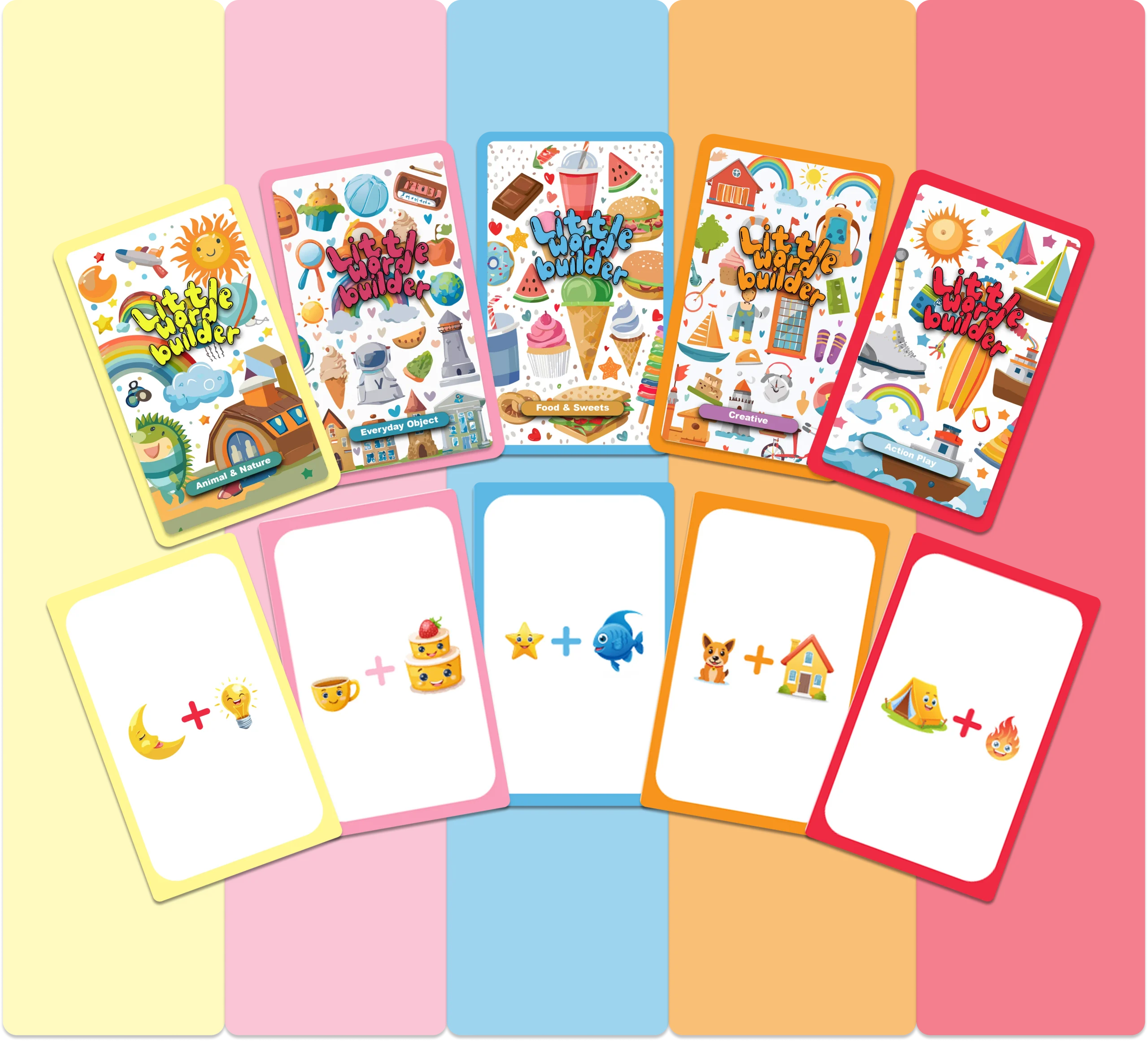
Using insights from user testing, I developed the final version of
Little Word Builder with clearer word combinations, improved card sizes, stronger category colors, and simpler instructions.
These changes created a more intuitive, engaging, and complete learning experience for children.
GAME GUIDE & LEARNING OUTCOMES:
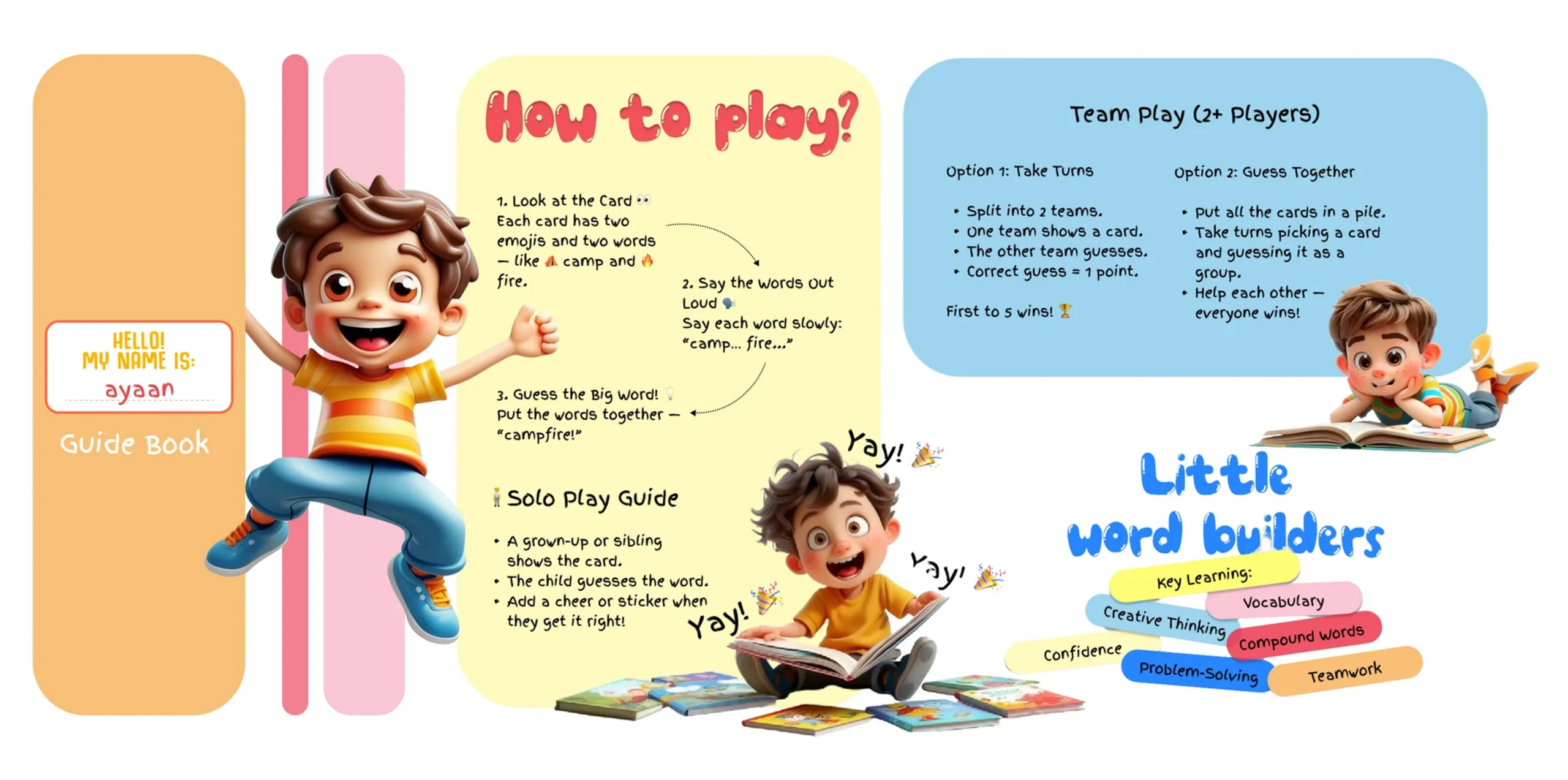
The guidebook explains how children can play independently or in teams while combining simple words to discover compound words. It also highlights key learning outcomes such as vocabulary, creative thinking, confidence, problem-solving, and teamwork.
PACKAGING DESIGN:
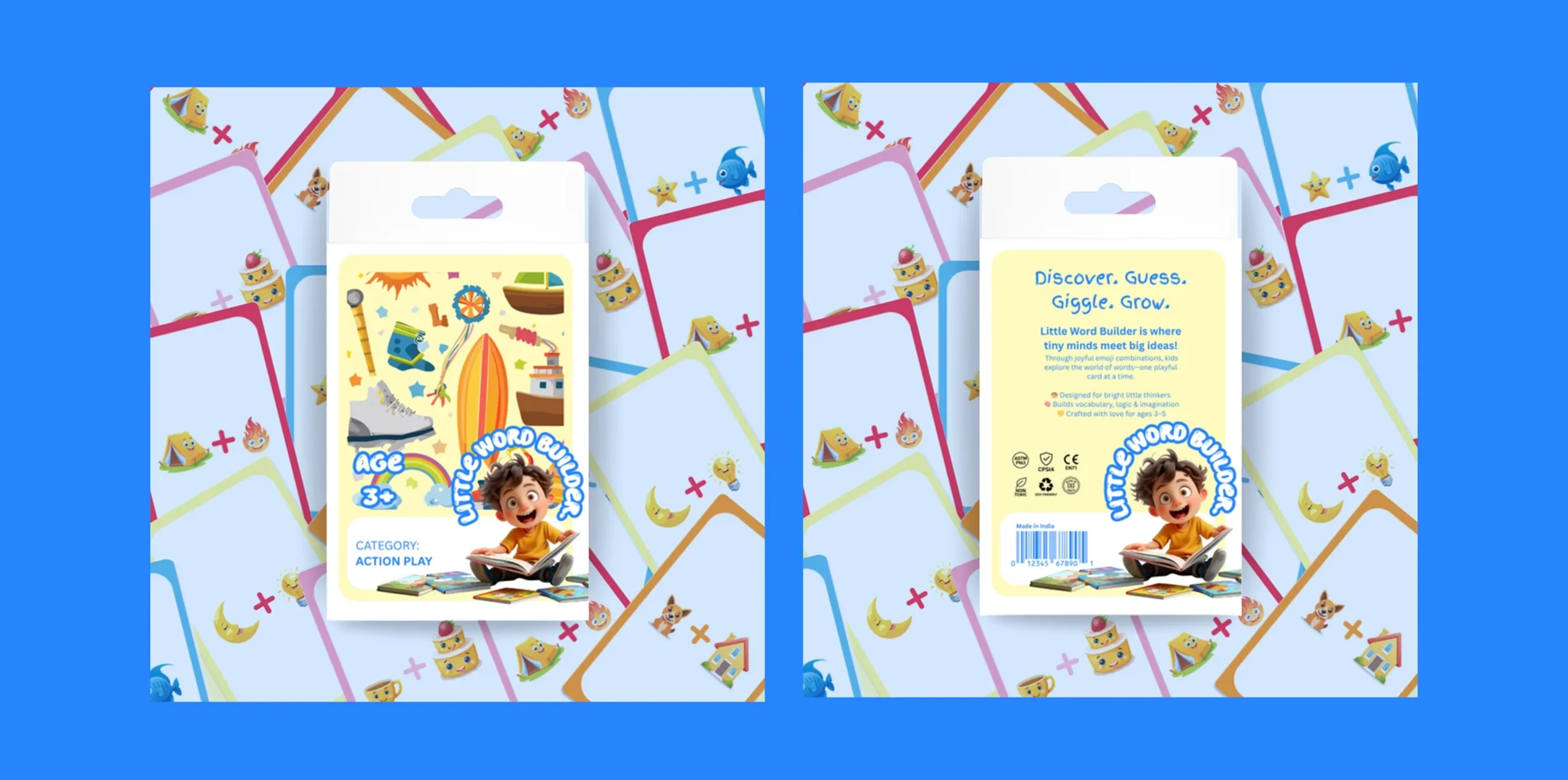
The packaging was designed to feel playful, clear, and easy for both children and parents to understand. The front highlights the game category and age group, while the back communicates the learning benefits, product details, and brand story in a simple, shelf-ready format.
PROJECT OUTCOME:
Little Word Builder was playtested with real users and validated for age suitability, engagement, comprehension, and parent appeal. The final game brings together visual learning, playful interaction, and clear instructions to make compound-word building easier and more enjoyable for children.
The process strengthened my ability to simplify complex ideas, respond to children’s developmental needs, and use testing insights to shape every part of the experience—from gameplay and visual communication to packaging.
Want to look for Something Else?